
Table of Contents
Navigating Home Heating Choices in California
Comparing heat pump vs gas furnace options in California in 2026 starts with understanding the state’s updated building standards. The 2025 California Energy Code took effect January 1, 2026, for all new construction and major alterations, according to the California Energy Commission, and it strongly encourages heat pumps for space and water heating to improve efficiency and lower carbon footprints. Buildings currently generate 25% of California’s total greenhouse gas emissions, which makes this shift a cornerstone of the state’s decarbonization strategy. This regulatory landscape means homeowners comparing heating systems must weigh efficiency ratings carefully, because those numbers directly affect both operating costs and environmental impact over the life of the equipment.
Key Takeaways
- Efficiency ratings provide a standardized way to compare performance.
- Heat pumps and gas furnaces are the two main heating options for California homes, and heat pumps also deliver cooling.
- California homeowners weighing a heat pump against a gas furnace can lower the upfront cost through a suite of federal, state, and utility incentives.
- Heat pumps deliver reliable heating when temperatures dip, a fact that holds especially true in the coastal microclimates around Studio City and the San Fernando Valley.
- Switching from a gas furnace to an electric heat pump in California means balancing long-term financial and environmental gains against higher upfront costs.
1. Understanding Efficiency Ratings
Efficiency ratings provide a standardized way to compare performance. Heat pumps are rated by SEER2 (Seasonal Energy Efficiency Ratio 2) for cooling and HSPF2 (Heating Seasonal Performance Factor 2) for heating; ENERGY STAR certified units typically achieve 15–24+ SEER2 and 7.5–13+ HSPF2. Gas furnaces are measured by AFUE (Annual Fuel Utilization Efficiency), which indicates how much fuel is converted into usable heat.
According to our FAQ page, switching from an older electric system to a variable-speed heat pump can reduce annual energy costs by 20% to 40%. California homeowners may also benefit from federal tax credits and state/utility incentives that can trim installation costs by $2,000 or more.
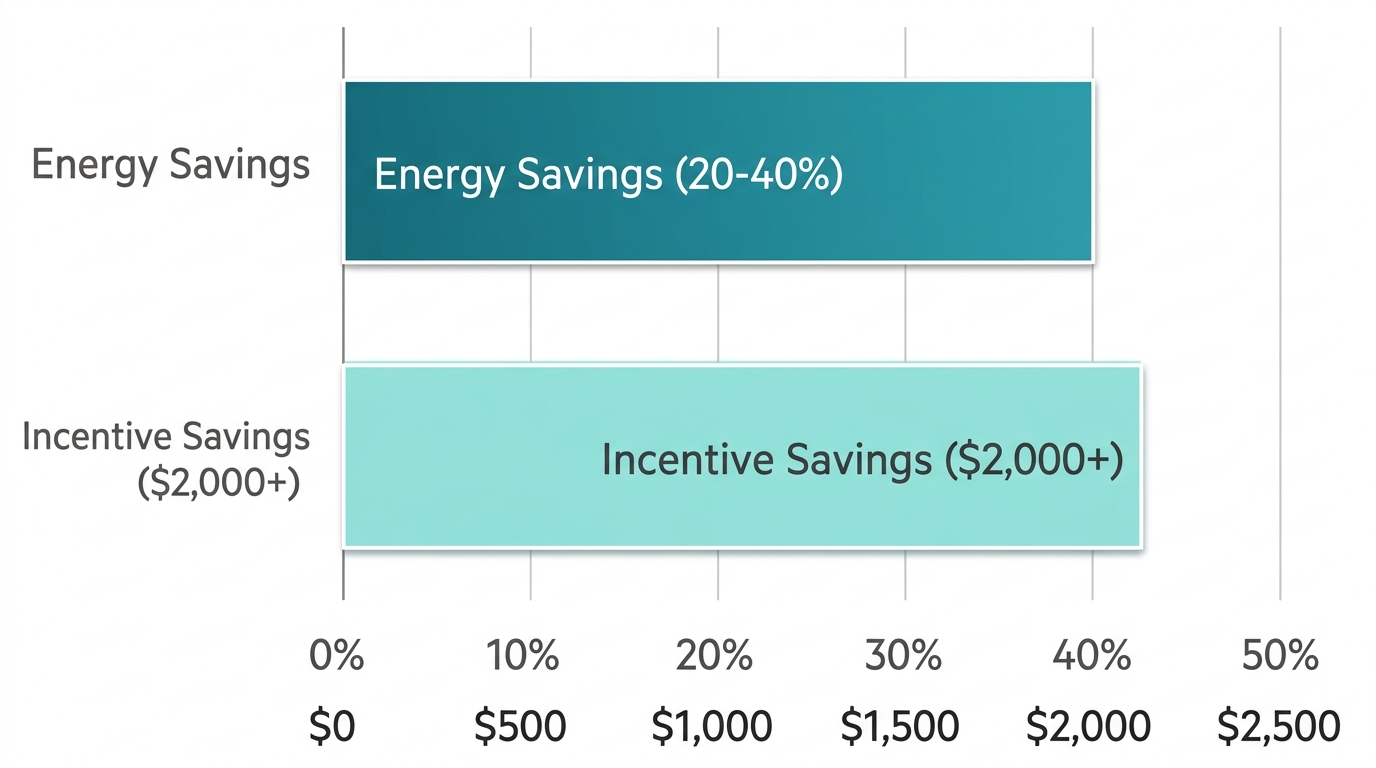
Higher efficiency ratings translate to lower utility bills, a crucial factor in California’s climate. Understanding these metrics is key when comparing heat pump vs gas furnace efficiency for your home.
2. Heat Pump vs Gas Furnace in California
Heat pumps and gas furnaces are the two main heating options for California homes, and heat pumps also deliver cooling. Your home’s ductwork and access to natural gas influence the decision, but many residents now choose heat pumps because one system can manage both heating and cooling.
Based on our experience in the San Fernando Valley, a variable-speed heat pump moves heat rather than burning fuel, eliminating the need for a separate furnace and cutting annual energy costs by 20 to 40 percent over older electric systems. When you compare the cost of a heat pump and a gas furnace, the higher upfront investment is often offset by long-term savings and available incentives. Federal tax credits and state utility programs can provide more than $2,000, putting high-efficiency units with SEER2 ratings of 15–24+ and HSPF2 ratings of 7.5–13+ within reach. As a family-owned business with over 15 years in the Valley, we’ve seen these incentives make heat pumps a financially sensible choice for many California families.
3. California Incentives and Rebates
California homeowners weighing a heat pump against a gas furnace can lower the upfront cost through a suite of federal, state, and utility incentives. California’s $590 million federal Home Energy Rebates allocation underwrites the HEEHRA and HOMES programs, which encourage energy-efficient upgrades including heat pumps. The California Energy Commission reports that Phase I single-family rebates were fully reserved by early 2026, pausing new income verification requests; multifamily rebates for heat pumps and other improvements remain available. To qualify for HEEHRA, income-qualified households must work with a TECH-certified and HEEHRA-trained contractor, and should watch for Phase II updates on the Commission’s website. Outside HEEHRA, additional state and utility-level incentives can further narrow the cost difference between a heat pump and a gas furnace for California residents. We urge homeowners to verify current rebate eligibility and funding with the California Energy Commission or their local utility, as programs evolve quickly. While incentives reduce initial costs, evaluating how a heat pump performs during cold snaps is critical for year-round comfort.
4. Performance During Cold Snaps
Heat pumps deliver reliable heating when temperatures dip, a fact that holds especially true in the coastal microclimates around Studio City and the San Fernando Valley. Our own educational resources confirm that these systems are considered highly effective for coastal areas because they manage both mild winters and summer humidity in a single, efficient unit. The typical winter lows here rarely drop to temperatures that degrade heat pump performance, so the system can extract enough heat from outdoor air to keep homes comfortable without switching to inefficient backup heating. With over 15 years serving local families, we have seen properly installed heat pumps consistently meet heating demands during the brief cold snaps that sometimes catch residents off guard. That dependable mild-weather performance is an important consideration when weighing whether an all-electric heat pump fits your home’s heating and cooling needs.
5. Pros and Cons of Switching to Electric
Switching from a gas furnace to an electric heat pump in California means balancing long-term financial and environmental gains against higher upfront costs.
The 2025 California Energy Code (effective January 1, 2026) encourages heat pump adoption, and, according to the California Energy Commission, buildings produce 25 percent of the state’s greenhouse gas emissions, so electrification helps cut that share. Heat pumps deliver heating and cooling in one unit, lowering lifecycle costs. At Studio City AC Repair Experts, we see that federal tax credits and state rebates often reduce the net investment by $2,000 or more, and in mild coastal microclimates like the Bay Area, the equipment handles winter heating and summer humidity efficiently.
On the other hand, installation typically costs $4,000 to $8,000 for a heat pump, compared to $2,500 to $6,500 for a traditional AC. Some homes also need an electrical panel upgrade, adding to the upfront expense.
These trade-offs make hybrid configurations—pairing a gas furnace with a heat pump—worth considering.
6. Hybrid System Savings
A high-efficiency variable-speed heat pump delivers substantial hybrid system savings in Studio City, where mild winters and warm summers make heat pump technology especially effective. Compared to older electric resistance heating, these systems cut annual energy use by 20% to 40% in Southern California’s mild climate. Because heat pumps move heat rather than create it, they serve as both heater and air conditioner, removing the need for a separate furnace. Federal tax credits and state or utility programs can reduce the upfront installation cost by $2,000 or more.
ENERGY STAR certified heat pumps achieve cooling efficiencies of 15 to 24+ SEER2 and heating efficiencies of 7.5 to 13+ HSPF2. These ratings translate into lower utility bills and more consistent indoor comfort. Although the initial investment may be higher than a standard central air conditioner, the long-term energy savings and available incentives deliver superior lifetime value. These financial benefits dovetail with California’s electrification regulations, and our team can provide a custom home assessment to estimate your potential annual savings.
7. California’s Electrification Regulations
For homeowners weighing a heat pump vs gas furnace in California, the 2025 Energy Code effective January 1, 2026 introduces new building standards that encourage heat pump adoption for both space and water heating. The code, issued by the California Energy Commission, applies to all new construction and major alterations. It pushes new homes away from gas-fired appliances by requiring electric-ready infrastructure in multifamily buildings, so future conversion to electric cooking and water heating is simpler. The commission reports that the building sector accounts for 25 percent of California’s total greenhouse gas emissions, making stricter efficiency rules a key part of the state’s climate plan.
These regulations directly influence the heat pump vs gas furnace decision for anyone planning a new build or major renovation in Studio City. We help homeowners interpret the code requirements and select a heating system that meets both their efficiency goals and the updated standards.
8. Selecting the Right System for Your Home
California’s push toward full electrification makes the choice between a traditional central air conditioner and a heat pump more than a simple equipment swap, it positions your home for the regulatory landscape ahead.
Heat pump installations typically carry a higher upfront cost than traditional central AC systems, largely due to the complexity of the equipment. A heat pump eliminates the need for a separate furnace, simplifying your home’s mechanical design and reducing the total system cost over its lifecycle. Federal tax credits and California state or utility-level incentives can subtract two thousand dollars or more from the net installation price, and in a mild coastal climate like Studio City’s, the efficiency gains often translate to a twenty to forty percent reduction in annual energy bills.
Beyond the financial picture, heat pumps are particularly well-matched to coastal microclimates where winters stay mild and summer humidity can be a concern.
Getting a professional assessment that weighs those specifics is the surest way to a tailored recommendation.
Selecting the right heating and cooling equipment is just the start; professional installation and year-round service are what turn a good decision into lasting comfort. As a family-owned company with over 15 years of experience serving Studio City, Studio City AC Repair Experts brings together trained technicians, full-service HVAC and electrical capabilities, and one-call convenience. We install and maintain both air conditioning and heating systems, and our maintenance plans help property owners protect their investment through every season. Whether you’re comparing a heat pump vs gas furnace in California for 2026, our team can guide you to the best fit and handle the installation with care. Call (818) 643-3794 or request your custom consultation online to start enjoying worry-free comfort.
Frequently Asked Questions
How does a heat pump perform during occasional Los Angeles cold snaps?
A heat pump performs reliably during occasional Los Angeles cold snaps, especially in coastal microclimates like Studio City and the San Fernando Valley. The typical winter lows rarely degrade performance, allowing the system to extract enough outdoor heat to keep homes comfortable without switching to backup heating. Properly installed heat pumps consistently meet heating demands during brief cold snaps.
What incentives are available for converting a home to all-electric HVAC?
Incentives include federal tax credits, the HEEHRA and HOMES rebate programs, and additional state or utility-level incentives. The HEEHRA Phase I single-family rebates are fully reserved as of early 2026, but multifamily rebates remain available. Income-qualified households must work with a TECH-certified and HEEHRA-trained contractor. These programs can offset installation costs by $2,000 or more.
What are the Pros and Cons of Switching from Gas to Electric Heating?
Pros include a heat pump delivering heating and cooling in one unit to lower lifecycle costs, efficiency in mild coastal climates, and federal tax credits and state rebates that can reduce the net investment by $2,000 or more. Cons are a higher upfront installation cost of $4,000 to $8,000 compared to $2,500 to $6,500 for a traditional AC, and potential need for an electrical panel upgrade.
Request Your Custom Consultation
Now that we have explored the critical factors in choosing a heat pump or gas furnace for your California home, the potential for 20-40% energy savings and the availability of incentives reducing costs by $2,000 or more make this a compelling time to act. With California’s 2026 energy code strongly encouraging electrification, securing the right system is more important than ever. Our family-owned teamcombines over 15 years of local experience with a full-service commitment to heating, cooling, and electrical work. We can provide a custom consultation that evaluates your home’s insulation, ductwork, and comfort needs to recommend the ideal solution. You will benefit from one-call convenience and maintenance plans designed to keep your system running at peak efficiency. Call us at (818) 643-3794 to schedule your personalized appointment. Let our trained technicians help you achieve year-round comfort in Studio City, California.
Request Your Custom Consultation